After one particularly average stream, I did something I'd never done: read the entire chat log, top to bottom, next to the VOD.
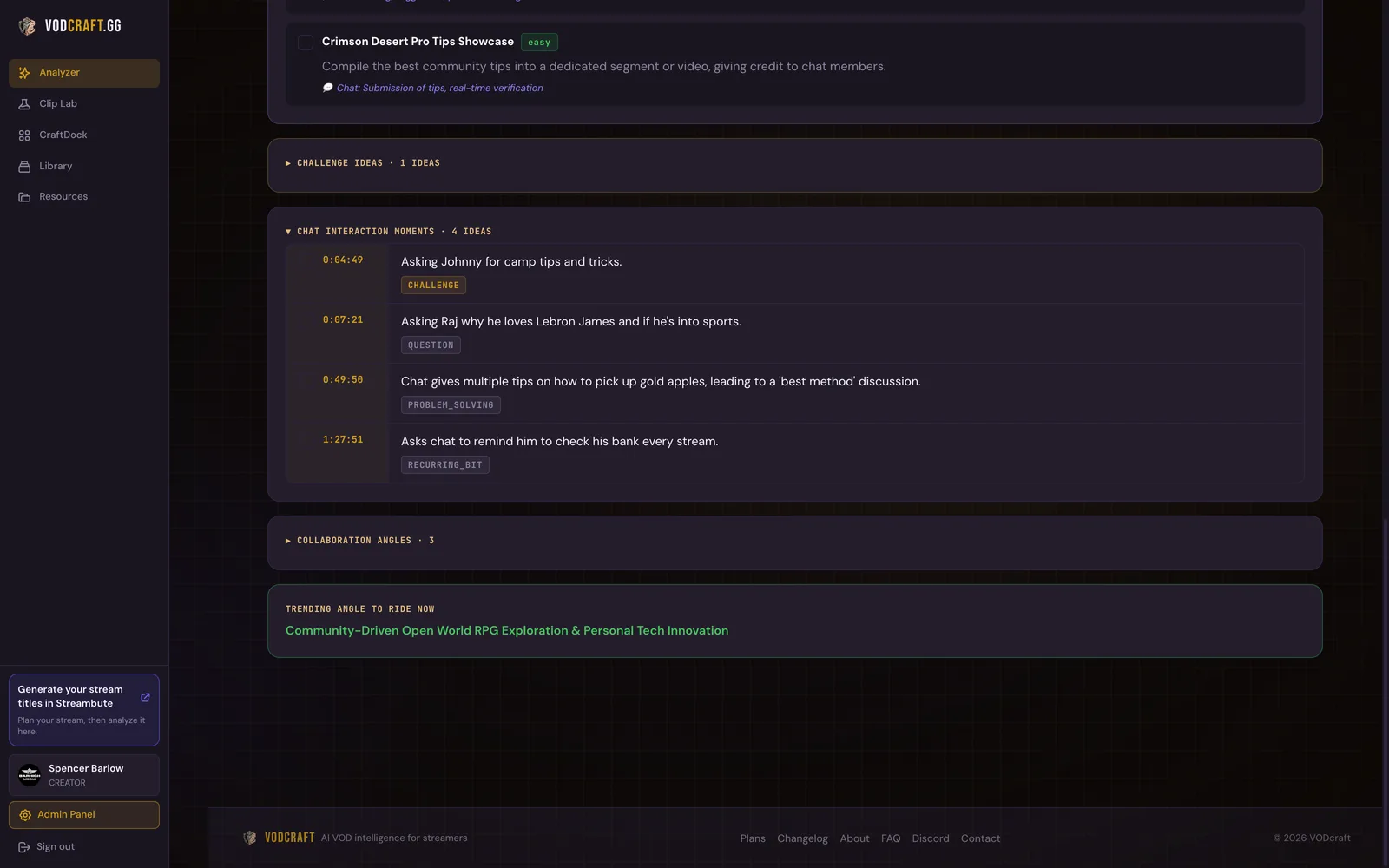
It was humiliating. Chat asked about my keybinds three times — three different people — and I never answered. Someone suggested a challenge idea that was genuinely better than anything I'd planned. A regular made a callback to a joke from the previous stream that could have become A Thing, and I steamrolled past it into a loot screen.
My audience spent four hours telling me exactly what content they wanted. I was too busy making my content to notice.
Why you miss it (it's not carelessness)
Live streaming is cognitive overload by design: play the game, narrate the game, watch the alert box, perform. Chat scrolls in your peripheral vision, and your brain triages it with one rule — react to what's reactable right now. Quick jokes get responses; anything requiring a beat of thought gets skipped.
But the skipped messages are the valuable ones. The quick banter is engagement's decoration. The questions, suggestions, and callbacks are its substance — each one is a viewer trying to invest in your channel. Every miss teaches them investing doesn't pay, and that lesson is exactly why viewers quietly leave.
The four signals worth catching
1. Repeated questions = requested segments. One person asking about your keybinds is a question. Three people across a month is your audience requesting a segment — a settings tour, a "how I got here" ramble, a loadout breakdown. Free content direction, pre-validated by demand.
2. Suggestions = co-authorship offers. "You should try X" is a viewer volunteering to be invested in the result. Take the suggestion — credit them by name on stream — and you convert a viewer into a stakeholder. They will be back to see how their idea went. (This is the entire psychology behind chat-driven events.)
3. Callbacks = lore forming. When chat references last week's disaster, your community is building shared history in real time. Feed a callback and it becomes an emote, an in-joke, a tradition. Miss enough of them and your chat stays a comment section instead of becoming a culture.
4. Threads between viewers = community happening without you. Two regulars talking to each other is the healthiest signal a channel has. It needs nothing from you except an occasional acknowledgment that their conversation is welcome — never talk over it just to fill air.
The Streamer Blueprint, 90-Day Growth Roadmap, StreamFinance tracker, Media Kit template and more. No cost.
The post-stream chat review (10 minutes)
You can't catch everything live — accept that. The system is a recovery loop:
- After each stream, skim the chat log (10 minutes, coffee-speed reading).
- Log three lists: questions I missed, suggestions worth trying, callbacks/jokes with legs.
- Open the next stream by paying the debts: "Three of you asked about keybinds Tuesday — settings tour in ten minutes. And Kevin, we're doing your cursed idea today."
That opener is quietly lethal: it proves chat gets heard (asks go up), it gives returning viewers continuity between streams, and it hands you pre-validated segments so you're never improvising an objective at go-live.
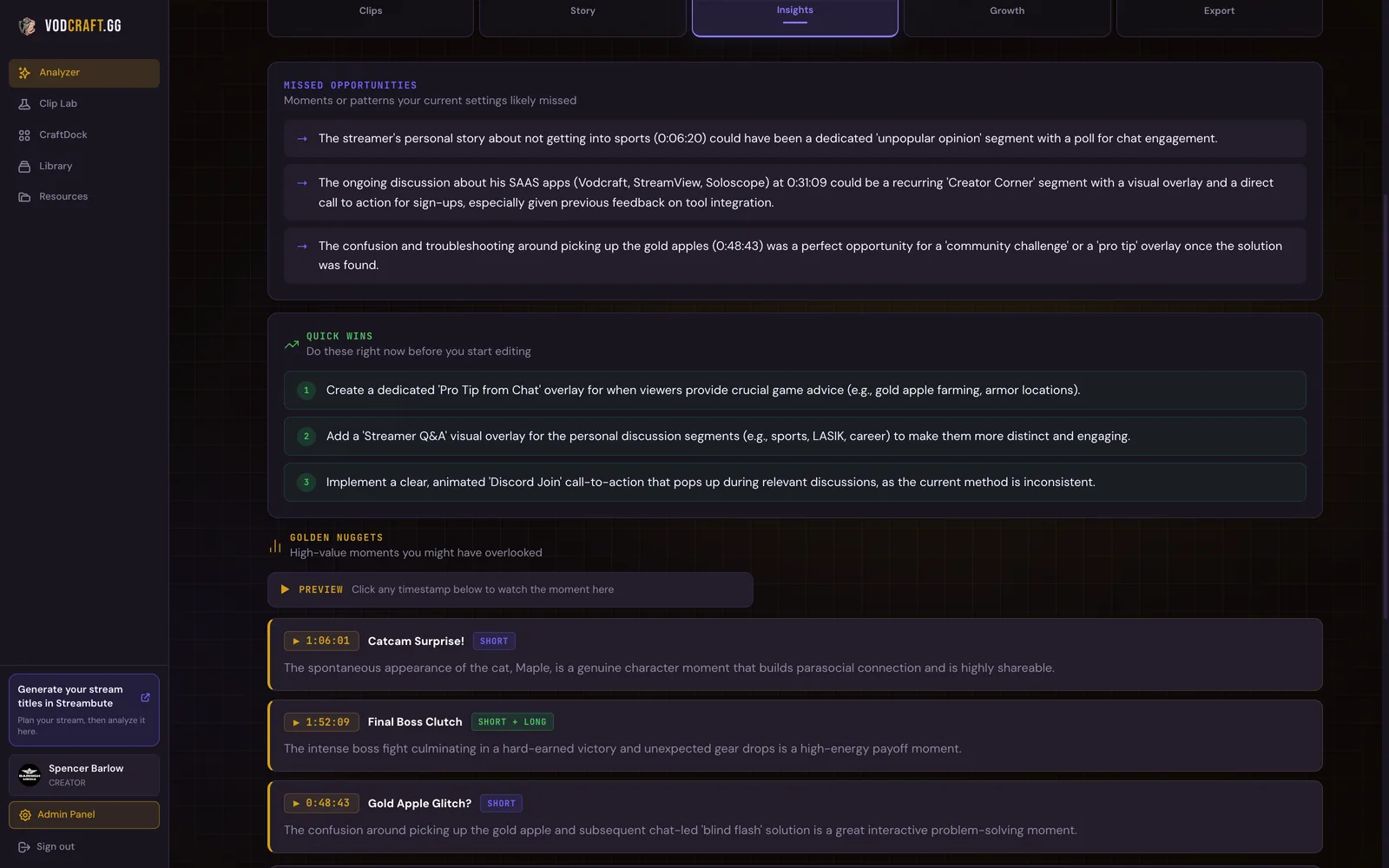
VODcraft reads your chat log against your VOD automatically and surfaces the questions, suggestions and threads you missed — timestamped, every stream.
Try VODcraft free →The takeaway
Your content calendar is already being written — by the people most invested in your channel, in a scrolling sidebar you're too busy to fully read. That's not a failure; it's a filing problem.
This week: pull the chat log from your last stream and make the three lists. Open your next stream by answering one missed question and running one suggested idea, credited by name. Watch what it does to the room. A chat that knows it's heard doesn't just talk more — it recruits.
The Streamer Blueprint, 90-Day Growth Roadmap, StreamFinance tracker, Media Kit template and more. No cost.
I built VODcraft because I was spending more time scrubbing my own VODs than actually improving my streams. Everything on this blog comes from streaming, failing, and fixing it.