"Why do viewers leave my stream?" is the question every streamer types into Google at 1 AM after checking their numbers. I've typed it. You've typed it. And the answers you find are always the same recycled list: stream more, better mic, play trending games.
None of that addresses the actual reasons people leave. After reviewing hundreds of hours of VODs — mine and other streamers' — the same five patterns show up every single time. Here they are, with exactly how to spot each one in your own footage.
Reason 1: Dead air
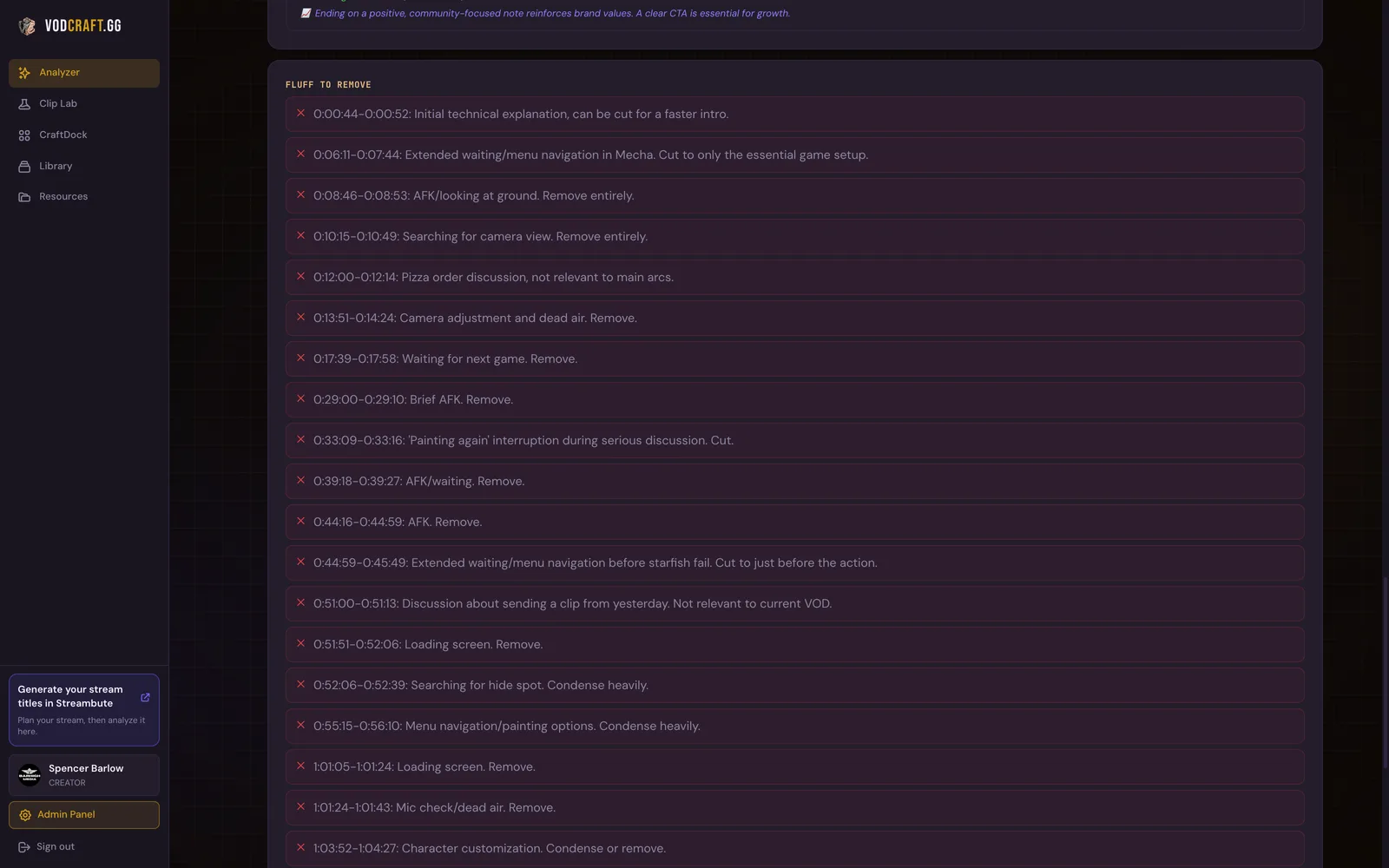
The big one. Viewers arrive, you're silent for ninety seconds while looting or navigating a menu, they leave. To you it felt like nothing — you were doing something. To a viewer who clicked on your stream eight seconds ago, it's a test pattern.
How to spot it: scrub your VOD at 2x and watch the audio waveform. Long flat stretches with game audio only = dead air. If you find a two-minute silence in your first thirty minutes of stream, that's not a small leak — that's the hole in the boat. I wrote a whole guide to finding and cutting dead air because it's that important.
Reason 2: Weak first impressions
Twitch browse is a wall of thumbnails. A viewer clicks yours, and you have maybe fifteen seconds before they judge. What are most streamers doing in those fifteen seconds? Nothing distinctive — mid-game, mid-silence, no context for what's happening.
You can't control when someone arrives, which is exactly why the fix isn't a scripted intro — it's raising your baseline. If your default state is "narrating what I'm doing and why it matters right now," every random arrival gets a hook.
How to spot it: jump to five random timestamps in your VOD and give yourself fifteen seconds at each. Would a stranger know what's happening? Would they have a reason to stay? If three out of five fail, that's your retention problem.
Reason 3: No clear objective
"Just chilling, playing some ranked" is not a story. Streams with a stated goal — hitting Diamond tonight, beating this boss deathless, finishing the build — give viewers a reason to stay: they want to see if you make it.
How to spot it: could a viewer who arrived an hour in describe what you're trying to accomplish tonight? If the honest answer is no, every session blurs into "person plays game," and there's no tension to hold anyone.
The fix costs nothing: declare an objective at the top of the stream, restate it when things swing, and react honestly when you succeed or fail. That's narrative structure, live.
Reason 4: Ignored chat threads
This one hurts to watch in your own VOD. A viewer asks a question. You're focused on the game and steamroll past it. They ask once more, softer. Then they're gone — and everyone else in chat learned that talking to you doesn't do anything.
Chat isn't decoration; it's the entire reason someone watches you instead of a YouTube video of the same game. Every ignored message teaches viewers not to invest. Your chat is constantly telling you what it wants — here's how to actually listen.
How to spot it: read your chat log side-by-side with your VOD. Count the questions and conversation starters you never acknowledged. Most streamers who do this once are horrified. Good — that's the fuel.
The Streamer Blueprint, 90-Day Growth Roadmap, StreamFinance tracker, Media Kit template and more. No cost.
Reason 5: No open loops
Open loops are the promises that keep people watching: "if we win this one, we're doing the impossible challenge next" — "wait till you see what I unlocked, showing it after this match." A stream with zero open loops gives viewers permission to leave at any moment, because nothing is pending.
How to spot it: at any random point in your VOD, is there anything a viewer is waiting to see happen? A goal in progress, a payoff promised, a reveal teased? If the answer is no for hours at a stretch, viewers leave at the first lull — you gave them a clean exit.
The pattern behind all five
Notice what these have in common: none of them show up in your analytics. The retention graph shows the drop at 1:42:00 — it doesn't show that chat asked about your loadout three times and you missed it, or that you went silent for four minutes right before the dip.
The graph shows when. The VOD shows why. That gap is the whole reason I stopped trusting the analytics dashboard as a source of improvement.
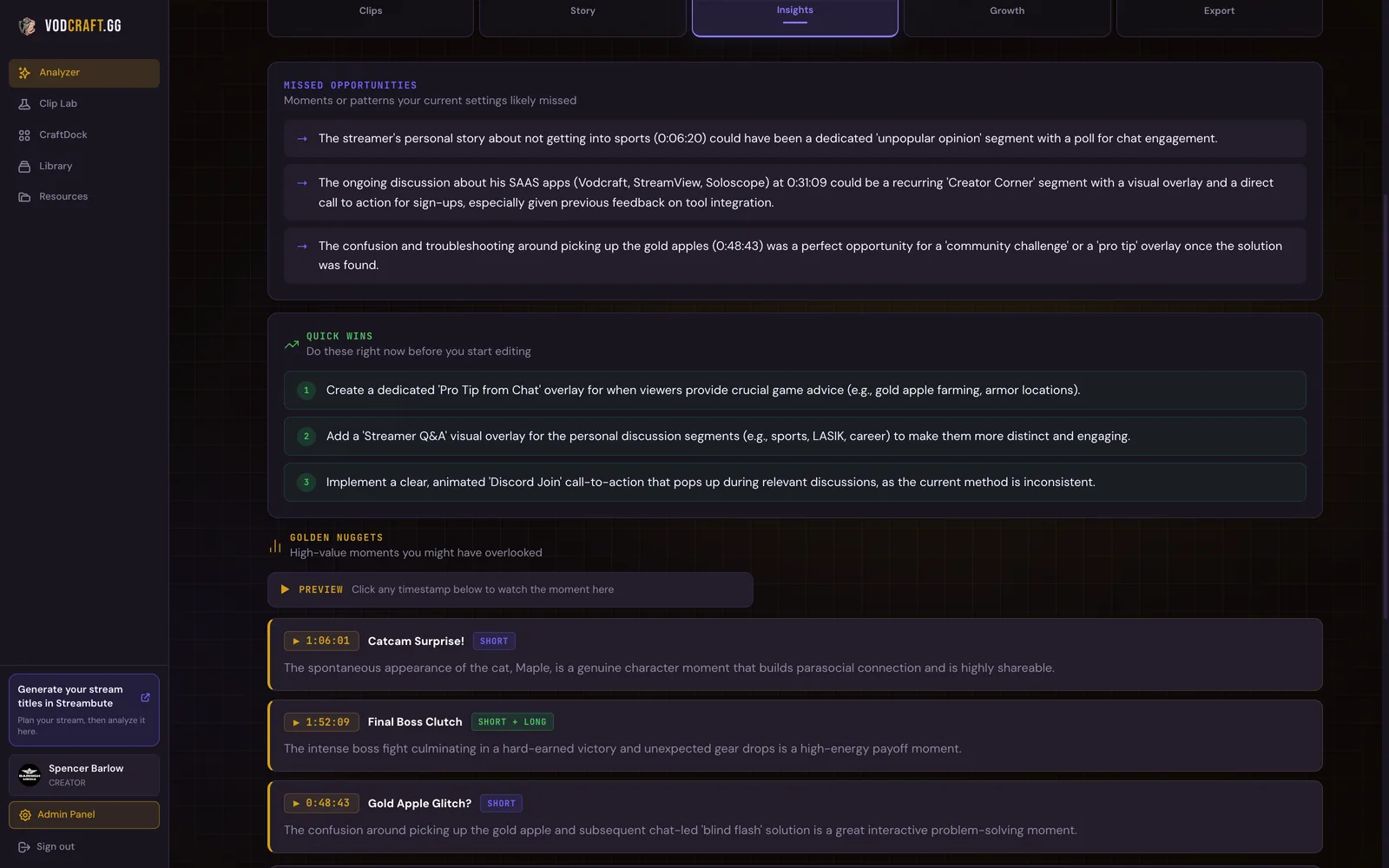
VODcraft watches your full VOD and flags all five of these — dead air with timestamps, missed chat threads, weak stretches, the moments worth keeping. Free to try.
Try VODcraft free →Your homework this week
Pick your most recent VOD and run the five checks — takes about thirty minutes at 2x:
- Find your longest silence in the first hour. Write the timestamp down.
- Spot-check five random moments — would a stranger stay?
- Ask: what was tonight's objective? Could chat have named it?
- Read the chat log against the VOD. Count ignored threads.
- Find one moment where you promised something later. If there isn't one, that's the note.
You'll come out with a shortlist of two or three specific behaviors — not vibes, behaviors — to fix in your very next stream. That's how retention actually improves: one visible, fixable habit at a time. The viewers didn't leave because of your game. They left because of something in the VOD — and now you know how to find it.
The Streamer Blueprint, 90-Day Growth Roadmap, StreamFinance tracker, Media Kit template and more. No cost.
I built VODcraft because I was spending more time scrubbing my own VODs than actually improving my streams. Everything on this blog comes from streaming, failing, and fixing it.