Here's an experiment that changed how I stream: I scrubbed one of my own VODs and wrote down every stretch of thirty seconds or more where I said nothing. Not "wasn't interesting" — literally said nothing.
The list from one three-hour stream:
0:14:20 – 0:16:05— inventory management, silent (1m 45s)0:41:10 – 0:42:00— queue screen, silent1:07:30 – 1:11:15— looting after a fight, 3 minutes 45 seconds of game audio only1:38:00 – 1:39:10— reading a menu2:20:40 – 2:23:00— "grabbing water," never told chat
Nearly nine minutes of dead air, and I had no memory of any of it. That's the thing about dead air: it's invisible from inside the stream. You were doing something — looting, thinking, reading. Your brain was busy. The viewer's wasn't.
Why dead air hurts twice
Live, dead air is where new viewers bounce. Someone clicks your stream during minute two of silent looting, sees a test pattern with gameplay, and leaves within fifteen seconds. You never know they existed. Multiply by every browse-page arrival during every silent stretch, and dead air quietly caps your growth. (It's the number-one item on my list of why viewers actually leave streams.)
On the VOD, it's worse — because rewatch tolerance is lower. Live viewers extend patience because it's live, anything could happen. VOD viewers and clip editors extend nothing. Every silent stretch is a reason to stop watching or stop editing.
How to find it in your VOD (15 minutes)
You don't need to rewatch the stream. You need to scan it:
- Scrub at 2x with the audio waveform visible (any editor shows it; even Twitch's seek preview helps). Silence looks like a flatline — your eye finds it faster than your ear.
- Timestamp every gap over 30 seconds. Don't judge yet, just log — like my list above.
- Cluster them. Dead air is a habit, and habits cluster: post-fight looting, between-match queues, menu decisions, "be right back" moments. Yours will have a signature. Mine was looting — I go completely silent when inventory opens, apparently for years.
The Streamer Blueprint, 90-Day Growth Roadmap, StreamFinance tracker, Media Kit template and more. No cost.
Fixing it live: the narration reflex
The fix is not "talk constantly" — forced chatter is its own repellent. The fix is a small set of reflexes that fill the structural gaps:
- Narrate decisions, not actions. Not "I'm opening my inventory" — but "okay, do I take the shield or gamble on finding a better one ahead?" Decisions have stakes; stakes are content.
- Assign your silences. Some game moments genuinely need focus. Say so: "clutch time, going quiet — talk after." That's not dead air anymore; it's tension. Chat leans in instead of leaving.
- Give menus a countdown. "Two minutes of loadout, then we run it back — chat, vote: sniper or shotgun?" Now the boring bit is a segment with participation.
- Never invisible-AFK. "Water break, 90 seconds, don't say anything nice about me while I'm gone" beats vanishing every time.
Fixing it in the edit: cut all of it
If you're turning streams into YouTube videos — and you should be — the rule is simpler: dead air does not survive the edit. None of it.
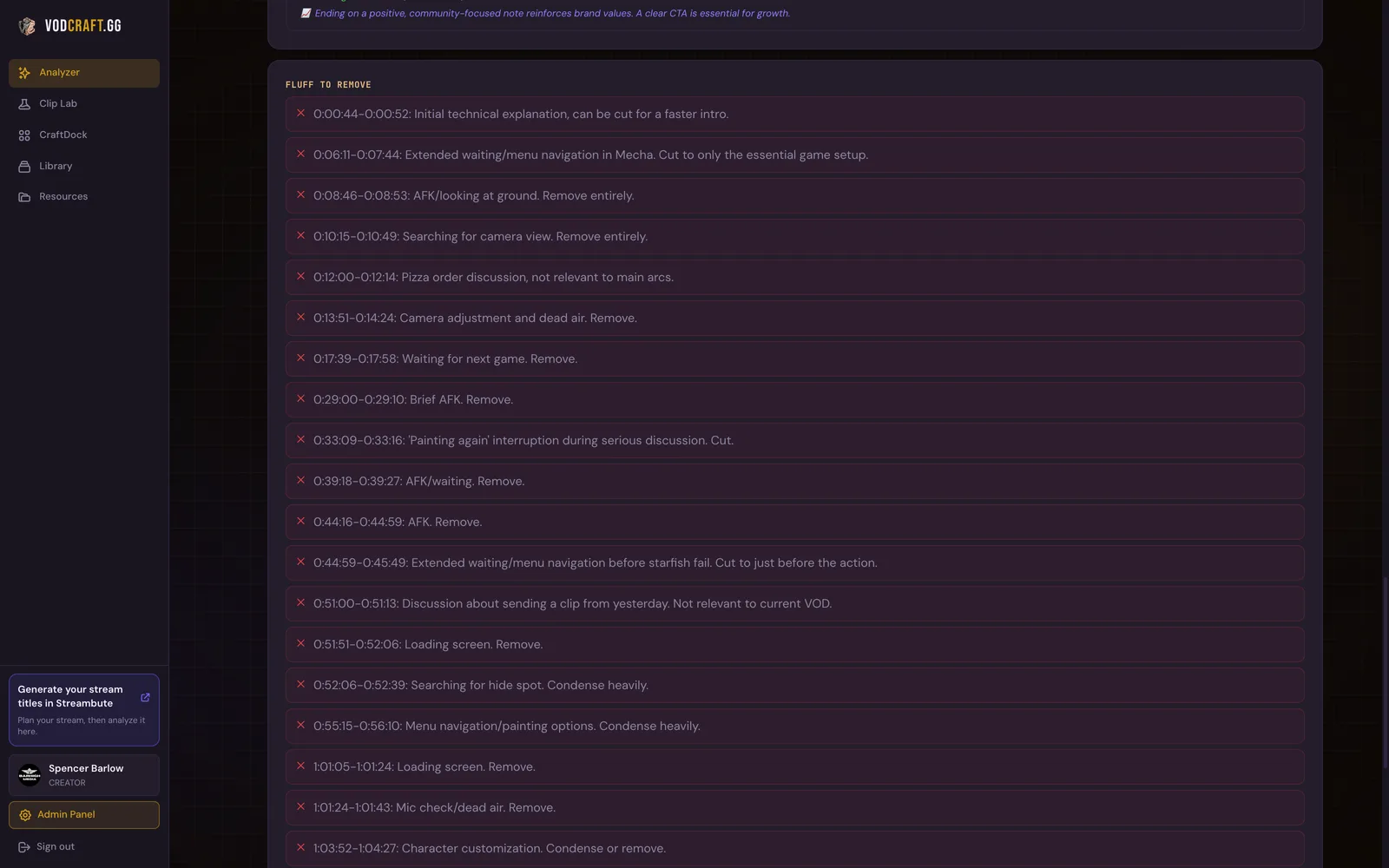
That feels violent the first time. A 3-hour stream loses 40+ minutes to silence-and-filler cuts alone. But watch the result: suddenly your video has pace. Every editor you admire is ruthless about this; it's half of what "good editing" even means. The other half is what you put where the energy dips — but the cuts come first.
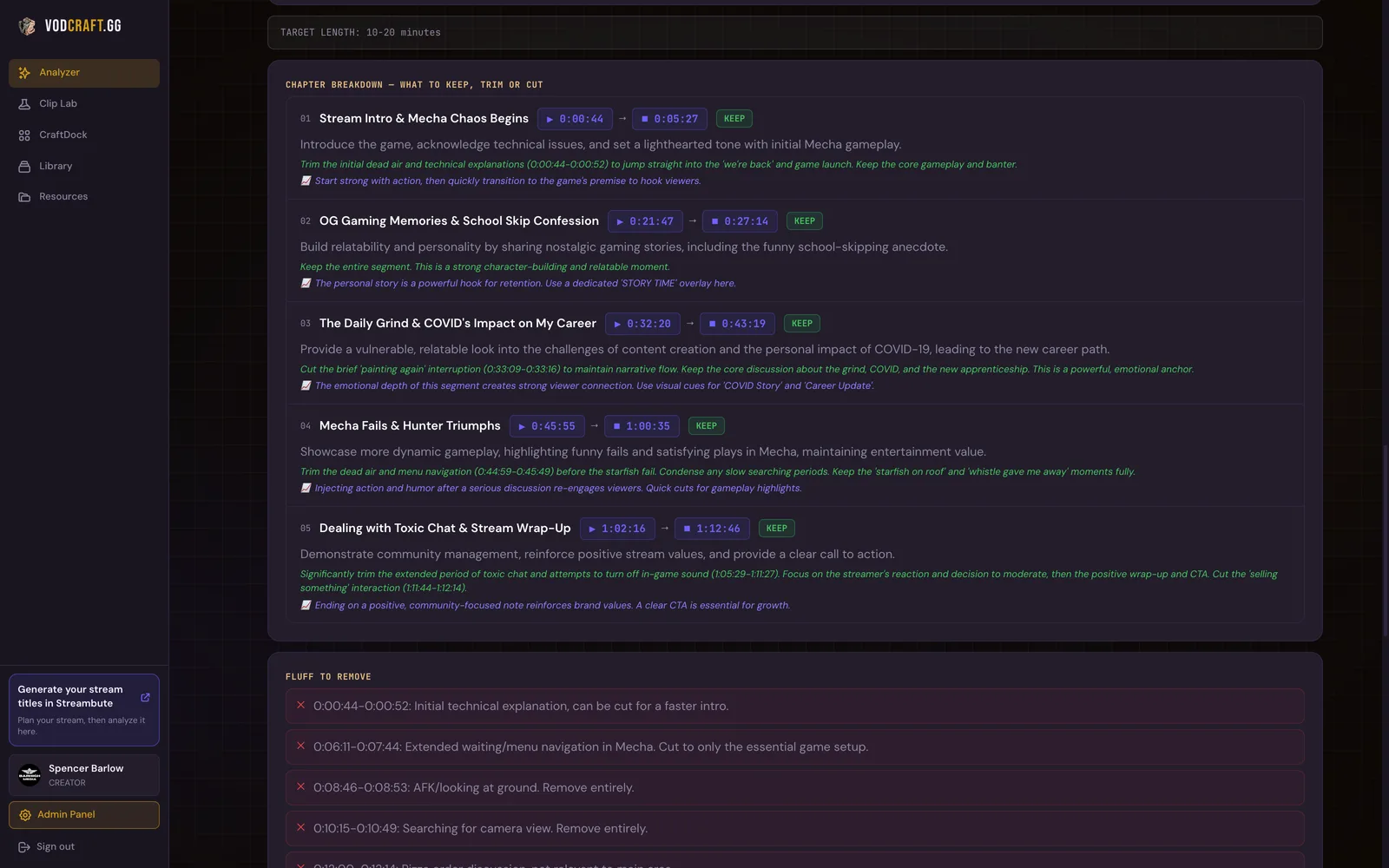
VODcraft maps every dead-air stretch in your VOD with timestamps automatically — the 15-minute scan, done before you open the file.
Try VODcraft free →The takeaway
Dead air isn't a personality flaw — it's a blind spot, and blind spots die on contact with evidence.
So get the evidence once: this week, scan one VOD and build your list. Find your cluster — your version of my silent looting. Then pick one reflex from the live-fix list and run it next stream. One habit, one week. Your VOD next Sunday will read differently — and so will the graph you used to squint at.
The Streamer Blueprint, 90-Day Growth Roadmap, StreamFinance tracker, Media Kit template and more. No cost.
I built VODcraft because I was spending more time scrubbing my own VODs than actually improving my streams. Everything on this blog comes from streaming, failing, and fixing it.